

Can You Wear Sterling Silver in the Shower?
Table of Contents
- Can You Wear Sterling Silver in the Shower? The Short Answer
- What Happens When Sterling Silver Gets Wet
- Is Sterling Silver Waterproof?
- How to Clean Sterling Silver Jewelry at Home
- How to Prevent Sterling Silver from Tarnishing
- 925 Sterling Silver vs. Plated Silver: Which Holds Up Better
- Best Practices for Everyday Wear
- Frequently Asked Questions
Last Updated: October 9, 2026
Can You Wear Sterling Silver in the Shower? The Short Answer
Yes, you can wear sterling silver in the shower, but it's not ideal for daily exposure. Water itself won't damage 925 sterling silver, but the combination of moisture, soap residue, and chlorine can accelerate tarnish and dull the finish over time. At Savannah Lane Jewelry, we recommend removing your pieces before showering when possible, though occasional exposure won't ruin them.
The key distinction is between occasional contact and regular, prolonged exposure. A quick splash during a shower won't cause immediate harm. But if you're showering daily while wearing your sterling silver, you're creating conditions that speed up oxidation and tarnish buildup.
Understanding what actually happens to sterling silver in water helps you make the right choice for your jewelry care routine. Let's break down the chemistry and give you practical strategies to keep your pieces looking brilliant.
What Happens When Sterling Silver Gets Wet
When sterling silver comes into contact with water, a chemical process begins that affects the metal's surface. Sterling silver is an alloy made of 92.5% pure silver and 7.5% other metals, typically copper. That copper content is what makes sterling silver durable and affordable, but it's also the element most vulnerable to water and moisture.
How oxidation and tarnish develop
Oxidation is the chemical reaction that occurs when silver comes into contact with oxygen and sulfur compounds. This process darkens the surface and creates the dull gray or black film called tarnish. Water accelerates this reaction by providing a medium for sulfur and other reactive elements to interact with the metal.
When you expose sterling silver to moisture repeatedly, you're essentially inviting oxidation to happen faster. The water doesn't directly damage the metal, but it creates the perfect environment for chemical reactions. Over weeks and months of shower exposure, you'll notice your once-shiny pieces becoming noticeably duller.
The tarnish itself isn't permanent damage. It's a surface layer that can be removed through proper cleaning. But preventing tarnish in the first place requires understanding what triggers it and minimizing exposure when you can.
The role of soap, shampoo, and chlorine
Soap and shampoo residue left on your jewelry creates another problem. These products contain chemicals and oils that cling to the metal surface. When combined with moisture, they form a film that traps water against the sterling silver and prevents it from drying properly.
Chlorine is a more serious concern. If you're wearing sterling silver in a chlorinated pool or hot tub, the chlorine chemically attacks the metal and can cause permanent pitting or discoloration. Chlorine is far more damaging than regular tap water or soap.
Hard water minerals also play a role. If your shower water is mineral-heavy, those deposits accumulate on the metal surface and create a dull appearance. This buildup is harder to remove than simple tarnish.
Is Sterling Silver Waterproof?
Sterling silver is not waterproof in the traditional sense, but it is water-resistant to a degree. The metal itself doesn't absorb water or rust like iron does.
The distinction matters. Water-resistant means the material can withstand some exposure without immediate harm. But repeated or prolonged exposure degrades the finish and appearance.
925 sterling silver can tolerate occasional water exposure without permanent harm. A splash during a shower, washing your hands while wearing a ring, or a brief dip in a pool won't destroy your jewelry. But daily shower wear creates cumulative damage that compounds over months.
The protective coatings some sterling silver pieces have, like rhodium plating on our Sterling Silver Ball Stud Earrings, 5mm, provide additional water resistance. Rhodium is a harder, more water-resistant metal that sits on top of the sterling silver.
How to Clean Sterling Silver Jewelry at Home
If your sterling silver does get exposed to water and moisture, knowing how to clean it properly restores its shine and removes tarnish. Regular cleaning extends the life of your pieces and keeps them looking like new.
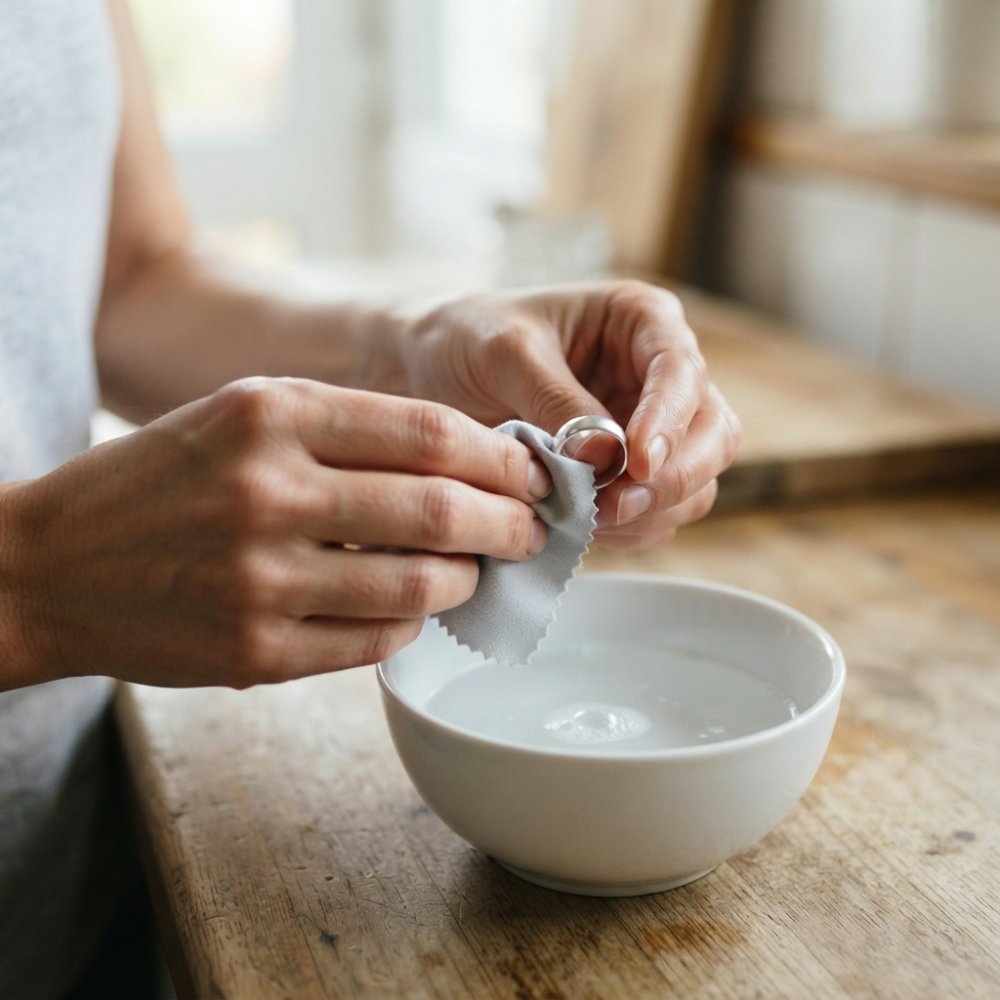
Step-by-step cleaning after shower exposure
Step 1: Dry your jewelry immediately. After shower exposure, pat your sterling silver dry with a soft, lint-free cloth.
Step 2: Prepare a gentle cleaning solution. Mix warm water with a few drops of mild dish soap in a bowl.
Step 3: Soak your jewelry. Place your sterling silver pieces in the soapy water for 5-10 minutes. This softens any buildup and prepares the surface for cleaning.
Step 4: Gently scrub with a soft brush. Use a soft-bristled toothbrush or jewelry brush to gently scrub the surface. Pay attention to crevices and settings where dirt accumulates.
Step 5: Rinse thoroughly. Rinse your jewelry under clean running water. Make sure all soap residue is removed, as leftover soap can dull the finish.
Step 6: Dry completely. Pat dry immediately with a clean, soft cloth. Make sure no moisture remains, especially in crevices or under settings.
Polishing cloth vs. ultrasonic cleaner
A polishing cloth is the safest, most practical option for regular maintenance. These cloths are treated with a gentle abrasive that removes light tarnish without damaging the metal. Simply rub your jewelry gently with the cloth until the shine returns. Polishing cloths work best on smooth surfaces like our Sterling Silver Cubic Zirconia Stud Earrings, 4mm.

Ultrasonic cleaners use sound waves to dislodge dirt and tarnish from jewelry. They're effective but come with risks. The vibrations can loosen gemstones or damage delicate pieces. If you use an ultrasonic cleaner, do so sparingly and only for sturdy pieces without loose settings.
For most daily wear jewelry, a polishing cloth and gentle hand cleaning are sufficient. You don't need expensive equipment to keep sterling silver looking brilliant.
Sterling Silver Cubic Zirconia Stud Earrings, 3mm →
| Cleaning Method | Best For | Frequency | Risk Level |
|---|---|---|---|
| Polishing cloth | Light tarnish, daily maintenance | Weekly or as needed | Very low |
| Gentle hand washing | Regular cleaning after exposure | After water contact | Low |
| Ultrasonic cleaner | Heavy tarnish, sturdy pieces | Monthly or less | Medium |
| Professional cleaning | Severe damage, antique pieces | Annually | None |
How to Prevent Sterling Silver from Tarnishing
Prevention is always easier than restoration. By taking a few simple steps, you can dramatically reduce tarnish and keep your jewelry looking new for years.
Storage and moisture control
Store your sterling silver in a cool, dry place away from direct sunlight. A jewelry box with a soft lining or a sealed plastic bag works well. Some people add silica gel packets to their storage containers to absorb excess moisture. This is especially helpful in humid climates.
Keep your jewelry separate from other pieces to prevent scratching. Store necklaces in individual pouches and stack rings carefully. Avoid storing jewelry in bathrooms, where humidity is highest.
Tarnish-resistant storage bags are available and worth the investment if you own multiple pieces. These bags contain materials that slow oxidation and extend the time between cleanings.
Daily habits that extend jewelry longevity
Remove your sterling silver before showering or swimming. This is the single most effective habit you can develop. Even five minutes of daily water exposure adds up to significant tarnish over weeks and months.
Apply perfume, lotion, and makeup before putting on your jewelry. These products contain oils and chemicals that accelerate tarnish when they sit on metal. Wait a few minutes after applying these products to let them dry, then put on your jewelry.
Avoid wearing sterling silver during exercise or activities that cause sweating. Sweat is acidic and contains salts that react with the metal. If you do sweat while wearing jewelry, clean it as soon as possible afterward.
Wear your jewelry regularly. This might sound counterintuitive, but frequent wearing actually keeps sterling silver from tarnishing as quickly. The natural oils from your skin provide a protective layer.
925 Sterling Silver vs. Plated Silver: Which Holds Up Better
Understanding the difference between solid sterling silver and plated silver helps you make informed choices about which pieces to wear in wet conditions.
925 sterling silver is solid metal throughout. The "925" stamping means the piece is 92.5% pure silver. This composition makes it durable and long-lasting.
Plated silver has a thin layer of silver over a base metal, usually copper or brass. The plating provides an attractive appearance but wears away with time and use. Once the plating wears through, the base metal underneath becomes visible.
For jewelry you plan to wear frequently, including in wet conditions, solid 925 sterling silver is the better choice. It's more forgiving of water exposure and lasts indefinitely with proper care.
Some sterling silver pieces have a rhodium plating, which provides additional water resistance and tarnish protection. Our Sterling Silver Diamond Cut Oval Hoop Earrings, 2x10mm feature rhodium plating for enhanced durability.

Best Practices for Everyday Wear
If you want to wear sterling silver jewelry daily, including in situations where water exposure is likely, follow these guidelines to minimize damage and keep your pieces looking beautiful.
Remove your jewelry before showering, swimming, or exercising. This is non-negotiable if you want your sterling silver to stay tarnish-free.
Dry your jewelry immediately if it does get wet. Even accidental splashes should be dried right away. Keep a soft cloth nearby for quick drying.
Clean your jewelry weekly with a polishing cloth if you wear it daily. Regular light cleaning prevents tarnish buildup.
Have your jewelry professionally cleaned annually if you wear it constantly. A jeweler has specialized tools and solutions that remove stubborn tarnish and restore the original finish.
Inspect your pieces regularly for signs of damage. Look for loose settings, worn plating, or areas where tarnish is particularly heavy. Catching problems early prevents further damage.
Sterling silver jewelry deserves care that keeps it looking beautiful for years. Our collection of fine sterling silver pieces, like our Sterling Silver Cubic Zirconia Stud Earrings, 3mm, is built to last with proper care.

Frequently Asked Questions
What happens if sterling silver gets wet in the shower?
Sterling silver exposed to shower water undergoes oxidation, which causes tarnish, a dark surface discoloration. The combination of water, soap residue, and air accelerates this chemical reaction. While occasional water exposure won't destroy your jewelry, repeated shower exposure without proper drying speeds up tarnish buildup. Chlorine in some water supplies can worsen corrosion. Drying your sterling silver immediately after any water contact prevents moisture from sitting on the metal surface and triggering oxidation.
Is sterling silver waterproof?
Sterling silver (925 sterling silver) is not waterproof. Water triggers oxidation, the chemical reaction that causes tarnish. However, brief water exposure won't cause permanent damage, the metal itself won't dissolve or corrode through. The real issue is long-term tarnish buildup from repeated moisture exposure. If your jewelry has a rhodium plating (a protective coating), it offers temporary water resistance, but that coating wears over time with heavy use and water contact. Removing your jewelry before showering is the safest approach for long-term durability.
How do you clean sterling silver jewelry after it gets wet?
Remove your jewelry and dry it immediately with a soft, lint-free cloth. For tarnish that's already developed, use a polishing cloth designed for sterling silver, these cloths contain mild abrasives that remove surface discoloration without scratching the metal. For deeper tarnish, soak the jewelry in warm water with a small amount of mild soap for 5-10 minutes, then gently scrub with a soft-bristled brush. Rinse thoroughly under running water and dry completely. Avoid ultrasonic cleaners if your jewelry has gemstones, as vibrations can loosen settings.
What's the best way to prevent sterling silver from tarnishing?
Store your jewelry in a dry place, ideally in an airtight container or a tarnish-resistant pouch that limits sulfur exposure. Remove jewelry before showering, swimming, or exercising. After wearing, wipe your pieces with a soft cloth to remove skin oils, perfume, and soap residue. Avoid storing jewelry in humid bathrooms. Keep sterling silver away from lotions, fragrances, and harsh chemicals, these accelerate tarnish. For daily-wear pieces, occasional polishing with a soft cloth maintains shine and prevents heavy tarnish buildup. The key is minimizing moisture exposure and chemical contact.