

Is Sterling Silver Good for Daily Wear? A 2026 Review
Table of Contents
- Is Sterling Silver Good for Daily Wear? The Honest Verdict
- What 925 Sterling Silver Everyday Wear Actually Means
- How Sterling Silver Holds Up: Durability, Strength, and Wear and Tear
- The Downsides of Sterling Silver Nobody Tells You
- Sterling Silver vs Gold, Stainless Steel, and Plated Jewelry
- Sterling Silver Tarnish Prevention: What Actually Works
- How to Clean Sterling Silver Jewelry at Home
- Realistic Lifespan, Repair, and When to Replace Silver Jewelry
- Frequently Asked Questions
Last Updated: October 13, 2026
Is Sterling Silver Good for Daily Wear? The Honest Verdict
Yes, the question of is sterling silver good for daily wear comes down to understanding what it needs from you.

Sterling silver sits in a useful middle ground. It costs far less than solid gold, looks more refined than stainless steel, and outlasts plated jewelry by a wide margin. The catch is that it asks for small, consistent habits.
Below, we break down durability, the downsides nobody mentions, and how sterling silver compares to the alternatives. We also cover exactly how to clean and store it so a piece you love still looks like itself in five years.
What 925 Sterling Silver Everyday Wear Actually Means
925 sterling silver is an alloy made of 92.5% pure silver and 7.5% other metals, usually copper (White Gold vs. Silver | What’s the Difference?). The 925 stamp is the industry standard for genuine sterling, and it appears on every piece we sell.

Pure silver on its own is too soft for jewelry that gets knocked around. Adding copper gives it the structure to hold a setting, survive a clasp opening and closing, and keep its shape on a finger or wrist.
Here is the part that matters for daily wear: the copper content is also what makes sterling silver tarnish. It is not a defect or a sign of low quality. It is chemistry, and it is manageable.
How Sterling Silver Holds Up: Durability, Strength, and Wear and Tear
Sterling silver is durable enough for daily wear, but it is not indestructible. It scratches. Thin chains can stretch. Prongs loosen over time. None of that means the piece is failing; it means it is being worn.
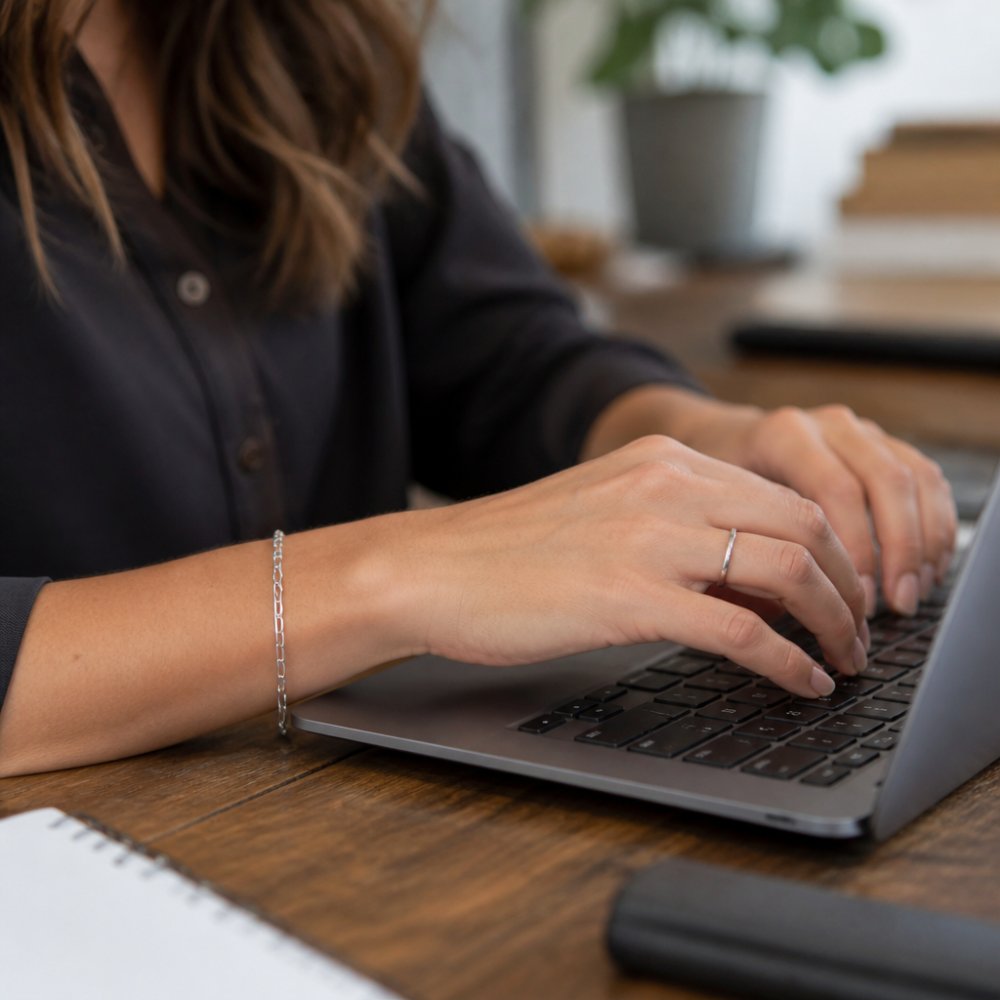
The practical rule is that sterling silver handles the ordinary parts of a day very well. It handles desks, keyboards, steering wheels, and coffee cups without complaint. It struggles with the extremes.
Why Copper Alloy Matters for Strength
Copper is the reason sterling silver can be shaped into delicate settings and slim chains without collapsing. A higher copper content means more strength and more tarnish risk. A lower copper content means a softer metal that dents more easily.
Reputable makers land on the 92.5/7.5 split because it is the tested balance point. When you see a sterling piece that feels flimsy, the issue is usually the thickness of the metal, not the alloy itself. A well-made 2mm hoop will outlast a poorly made 4mm one.
Activity-by-Activity Wear Limits
Some activities are fine. Some will shorten the life of your jewelry. Here is how we would sort them:
| Activity | Wear Sterling Silver? | Why |
|---|---|---|
| Office work, commuting | Yes | Normal contact, no chemical exposure |
| Sleeping | Prefer not | Chains catch and stretch; prongs snag |
| Showering | Prefer not | Soap residue dulls the surface over time |
| Swimming (chlorinated) | No | Chlorine attacks the alloy and plating |
| Gym and heavy sweating | Prefer not | Sweat and salt speed up oxidation |
| Gardening, cleaning | No | Impact damage and household chemicals |
| Applying lotion or perfume | Remove first | Product buildup is the top cause of dullness |
The Downsides of Sterling Silver Nobody Tells You
Tarnishing is the headline downside, and it is not optional. Sterling silver reacts with sulfur compounds in the air, in sweat, and in some foods.
The second downside is softness. Sterling silver is harder than pure silver but softer than gold alloys and stainless steel. Rings worn on a dominant hand will show scratches faster than a necklace that mostly sits still.
Third, rhodium plating, which we use on many of our pieces for extra shine and tarnish resistance, does wear down over time with heavy use. It is a surface treatment, not a permanent shield.
None of these are dealbreakers. They are maintenance items, and maintenance is predictable.
Skin Irritation and Allergic Reaction Risk
Genuine sterling silver is a good choice for most sensitive skin. The metal itself rarely causes reactions. The usual culprits are the copper in the alloy and, more often, nickel found in plated or costume jewelry.
If you have reacted to cheap earrings before, that reaction was most likely nickel, not silver. Sterling silver contains no nickel. If your skin is very reactive, rhodium-plated sterling is often the most comfortable option because the rhodium sits between your skin and the alloy.
One caveat: a green or black mark on your skin is not an allergy. It is a normal reaction between the copper in the alloy and your skin's acidity, and it washes off.
Sterling Silver vs Gold, Stainless Steel, and Plated Jewelry
Each material wins in a different category. Sterling silver wins on value and versatility; it gives you a fine-jewelry look at a fraction of the gold price, and it works with everything from workwear to casual outfits.
Gold, including solid gold and gold-filled, resists tarnishing better and holds up to rougher daily wear.
Stainless steel is the toughest option and the most casual. It will not tarnish and it survives the gym, the shower, and the pool.
Plated jewelry is the cheapest and the shortest-lived. The coating wears through at contact points, and once it does, the base metal shows. For occasional wear it is fine. For everyday wear, it is a false economy.
Sterling Silver Cubic Zirconia Stud Earrings, 3mm →
| Material | Tarnish Resistance | Daily Wear Durability | Relative Cost | Best For |
|---|---|---|---|---|
| Sterling silver (925) | Moderate | Good with care | Low to mid | Everyday fine jewelry |
| Solid gold | High | Excellent | High | Heirloom pieces |
| Gold-filled | High | Very good | Mid to high | Frequent wear on a budget |
| Stainless steel | Excellent | Excellent | Low | Active, casual wear |
| Plated jewelry | Low | Poor | Lowest | Occasional wear only |
Sterling Silver Tarnish Prevention: What Actually Works
Tarnish prevention comes down to three things: reducing chemical exposure, controlling moisture, and limiting air contact during storage. Do those three and you will polish your jewelry far less often.
Everyday Habits That Slow Oxidation
- Put jewelry on last, after perfume, lotion, and hairspray have dried
- Take it off first when you get home, before cleaning or cooking
- Wipe each piece with a soft cloth before it goes back in the box
- Keep pieces in an airtight bag or a lined jewelry box, not loose on a tray
- Wear your silver regularly; the oils on your skin actually slow tarnish on frequently worn pieces
That last point surprises people. Silver that sits untouched in a drawer tarnishes faster than silver worn daily, because skin contact creates a light protective film and keeps air off the surface.
How to Clean Sterling Silver Jewelry at Home
You can clean sterling silver at home with dish soap, warm water, and a soft cloth for most routine upkeep. Save the stronger methods for pieces that have actually darkened.
Routine cleaning, every few wears:
- Fill a bowl with warm water and a drop of mild dish soap
- Soak the piece for two to three minutes
- Work a soft-bristled brush gently into crevices and around settings
- Rinse under warm running water
- Dry completely with a soft, lint-free cloth before storing
For tarnished pieces:
- Use a sterling silver polishing cloth, which is impregnated with a mild cleaning agent
- For heavier tarnish, a liquid silver cleaner works, but dip briefly and rinse thoroughly
- Never use toothpaste, baking soda paste, or abrasive scrubbing on rhodium-plated pieces; they will scratch the finish
Jewelry care and cleaning guidance from the Gemological Institute of America is a good reference if you want a professional standard to follow.
Care by Jewelry Type and Finish
Different pieces need different handling, and treating them all the same is how people damage things they love.
Earrings. Studs and hoops collect skin oils and hair product. Wipe the posts and the front with a soft cloth after each wear. Rhodium-plated styles like our Sterling Silver Ball Stud Earrings, 5mm need nothing more than that.
Bracelets. These take the most contact damage because they rest on desks and catch on sleeves. Adjustable styles with a drawstring clasp, like our 925 Sterling Silver Rhodium Plated Paperclip Chain Adjustable Bracelet, are easy to remove before rough tasks, which is the best protection you can give them.
Pieces with stones. Cubic zirconia and similar stones are durable but can loosen in a prong setting over time.
High-polish finishes. Polished surfaces show fingerprints and fine scratches more than textured ones. A diamond-cut or brushed finish hides everyday wear better, which is worth knowing if you plan to wear the same piece every single day.
Realistic Lifespan, Repair, and When to Replace Silver Jewelry
A well-made sterling silver piece worn daily will typically last years, and often decades, with basic care. The metal does not degrade.
Expect normal wear markers along the way. Fine scratches appear within months. Prongs may need tightening after a few years. A chain may need a new clasp.
Replace rather than repair when the metal itself has thinned, when a stone setting has worn through, or when the repair quote approaches the cost of something new.
One practical note for anyone buying fine jewelry online: check the piece carefully in the first week.
The honest answer is that sterling silver rewards people who treat it well.
At Savannah Lane Jewelry, we build our collection around that reality.
Frequently Asked Questions
Is there a difference between 925 silver and sterling silver?
No. The terms mean the same thing. Sterling silver is defined as 92.5% pure silver mixed with 7.5% other metals, usually copper. The '925' stamp is simply the hallmark that confirms this composition. When you see '925 silver' or 'sterling silver,' you are looking at identical material. The copper alloy is what gives sterling silver its strength, since pure silver on its own is too soft to hold a shape in everyday jewelry.
Does sterling silver tarnish if you wear it every day?
It can, but daily wear actually slows tarnishing rather than speeding it up. The skin oils that coat silver create a thin barrier against the sulfur compounds in air that cause oxidation. The real tarnish risks come from moisture, sweat, perfume, lotion, and chemicals like chlorine. Wiping your pieces with a soft cloth after wear and storing them dry removes the residue that traps tarnish. Rhodium-plated sterling silver adds another layer of protection.
Can you shower while wearing sterling silver jewelry?
You can, but it is not ideal for long-term shine. Water alone is not the problem; soap scum, shampoo residue, and the minerals in hard water leave a film that dulls the surface over time. Chlorine in pools and hot tubs is more aggressive and can discolor the metal. If you shower in your silver, dry it thoroughly afterward with a soft cloth. Removing jewelry before showering is the simplest way to prevent tarnishing.
What are the downsides of sterling silver for daily wear?
The main downsides are tarnishing, scratching, and sensitivity for some wearers. Sterling silver oxidizes when exposed to sulfur, moisture, and chemicals, which turns the surface dark over time. It is softer than stainless steel or gold, so it picks up fine scratches with heavy use. The copper in the alloy can also trigger skin irritation in people with a copper or nickel sensitivity. Most of these issues are manageable with regular cleaning and smart wear habits.
How do you keep sterling silver jewelry from tarnishing?
Wear it regularly, since skin oils slow oxidation. Put jewelry on last, after perfume and lotion have dried, and take it off before swimming, showering, or cleaning. Wipe each piece with a soft cloth after wear to remove sweat and oils. Store pieces in an airtight bag or a tarnish-resistant pouch with a small anti-tarnish strip. For rhodium-plated sterling silver, avoid abrasive polishes that can wear through the plating over time.