

Sterling Silver vs Gold Vermeil: Durability Comparison
Table of Contents
- What Is Sterling Silver?
- What Is Gold Vermeil?
- Sterling Silver vs Gold Vermeil: Durability Head-to-Head
- How to Clean Sterling Silver Jewelry
- Gold Vermeil Maintenance Tips
- Longevity of Gold Vermeil Jewelry
- Price vs. Value: Which Offers Better Investment
- Repairability and Replating
- Frequently Asked Questions
Last Updated: September 30, 2026
What Is Sterling Silver?
Sterling silver is an alloy made from 92.5% pure silver and 7.5% other metals, typically copper. The "925" stamp you see on jewelry indicates this precise composition. This blend creates a metal that's both durable and workable for jewelry crafting, since pure silver alone is too soft to hold its shape under everyday wear.

The copper content strengthens the metal while maintaining that signature bright, lustrous finish people love. Sterling silver develops a natural patina over time, a darkening called tarnish, which is actually a thin layer of oxidation. Unlike corrosion, tarnish is purely cosmetic and completely reversible with proper cleaning.
Sterling silver jewelry has been treasured for centuries because it offers genuine precious metal value at a more accessible price point than solid gold. It's hypoallergenic for most people, making it ideal for sensitive skin. Many jewelers prefer working with sterling silver because it accepts intricate designs and detailed settings that showcase gemstones beautifully.
What Is Gold Vermeil?
Gold vermeil is sterling silver that's been coated with a thick layer of gold plating through electroplating. The key distinction from regular gold plating is the thickness requirement: federal trade standards define vermeil as having at least 2.5 microns of gold plating over a sterling silver base. This substantial coating gives vermeil jewelry the luxury aesthetic of solid gold at a fraction of the cost.

The electroplating process bonds the gold mechanically to the silver base, creating a durable surface finish. Because the foundation is sterling silver, vermeil pieces retain precious metal value even as the plating wears. The gold layer provides that warm, rich color and shine that solid gold offers, while the sterling silver base ensures structural integrity.
Vermeil sits in the middle ground between solid gold and standard gold-plated jewelry. It's more durable than typical gold plating, which uses thinner coatings, yet more affordable than solid gold. The thickness of the gold layer directly impacts how long vermeil jewelry maintains its appearance before replating becomes necessary.
Sterling Silver vs Gold Vermeil: Durability Head-to-Head
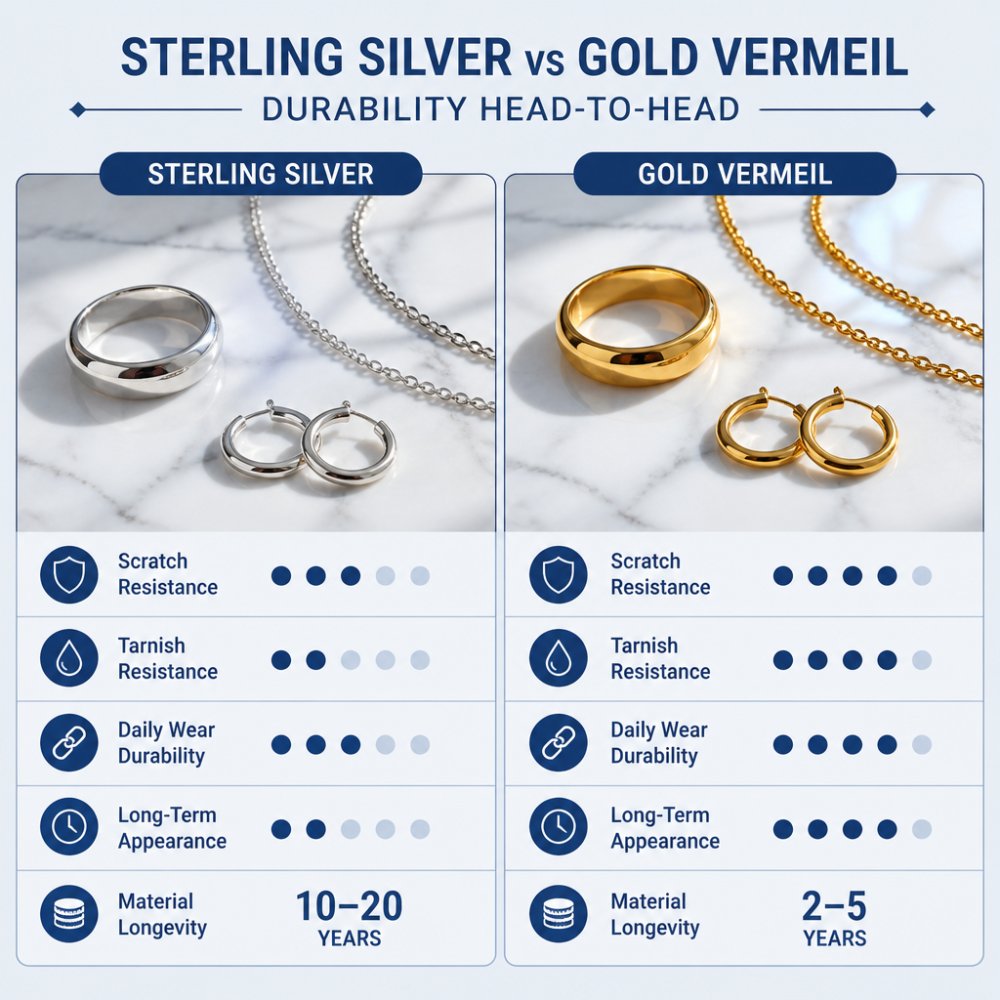
When comparing sterling silver and gold vermeil, durability depends on how you define it. Sterling silver is inherently more durable as a base metal, it won't wear through or degrade. Gold vermeil's durability centers on how long the gold coating lasts before showing base metal underneath.
Wear Resistance and Daily Use
Sterling silver handles daily wear exceptionally well. The metal itself resists scratching better than solid gold, and minor surface marks don't compromise the piece's integrity. You can wear sterling silver rings, bracelets, and earrings constantly without worrying about the base metal wearing away.
Gold vermeil's wear resistance depends on how thick the plating is and how actively you wear the piece. With proper care, vermeil jewelry easily lasts 2-3 years of regular daily wear before the gold coating begins showing wear. Heavy daily use, especially on rings or bracelets that experience friction, can reduce this timeline. The sterling silver base never wears away, but once the gold plating thins, the silver shows through, changing the piece's appearance.
For everyday office wear or moderate activity, both materials perform well. Sterling silver requires no special precautions. Vermeil benefits from occasional breaks and protection from excessive friction, moisture, and chemical exposure.
Tarnishing and Oxidation
Sterling silver tarnishes when exposed to sulfur compounds in the air, moisture, and certain cosmetics. This natural oxidation creates a dark patina that builds gradually. Tarnish is purely aesthetic, it doesn't weaken the metal or make it unsafe to wear. A soft polishing cloth removes tarnish in seconds, restoring the bright finish.
Gold vermeil doesn't tarnish because the gold coating prevents direct contact between the sterling silver and air. However, if the gold plating wears through, the exposed silver underneath can tarnish. The gold layer essentially delays tarnishing rather than eliminating it permanently.
For people who prefer a consistently bright finish without maintenance, vermeil offers convenience. For those who appreciate patina or don't mind occasional polishing, sterling silver's tarnishing is a non-issue. Many people actually prefer the vintage aesthetic that develops on sterling silver over time.
Plating Integrity and Longevity
The gold plating on vermeil jewelry gradually wears from friction, skin acidity, exposure to lotions and perfumes, and contact with water. Even with careful use, the plating thins over time. The rate depends on thickness, your skin chemistry, activity level, and how often you wear the piece.
Sterling silver, by contrast, maintains its structural integrity indefinitely. It won't thin, flake, or degrade as a metal. The only change is tarnish, which is reversible.
Sterling Silver Cubic Zirconia Stud →
This fundamental difference makes sterling silver the more predictable choice for longevity. Vermeil offers the luxury look longer, but eventually requires replating to restore its appearance. Sterling silver pieces can be worn for decades or passed down as heirlooms without losing their essential material properties.
How to Clean Sterling Silver Jewelry
Regular maintenance keeps sterling silver bright and prevents heavy tarnish buildup. The simplest method is wiping your jewelry with a soft, lint-free cloth after each wear. This removes skin oils and moisture that accelerate tarnishing.

For light tarnish, use a specialized silver polishing cloth designed for jewelry. These cloths contain mild abrasives that safely remove oxidation without scratching the metal. Gently rub the tarnished areas until the shine returns.
For heavier tarnish, a silver cleaning solution works effectively. Soak the jewelry for a few minutes, then gently scrub with a soft brush or cloth. Rinse thoroughly with clean water and dry completely before storing. Avoid harsh scrubbing, which can scratch the surface.
Store sterling silver in a cool, dry place away from direct sunlight.
Gold Vermeil Maintenance Tips
Gold vermeil requires more careful handling than sterling silver to preserve the plating. Remove vermeil jewelry before showering, swimming, or exercising, as moisture and sweat accelerate plating wear. Avoid exposure to lotions, perfumes, makeup, and sunscreen, which contain chemicals that can degrade the gold layer.
Longevity of Gold Vermeil Jewelry
With proper care, gold vermeil jewelry maintains its appearance for 2-3 years of regular daily wear. Lighter wear extends this timeline significantly. Some pieces last 5+ years if worn occasionally and handled carefully.
Price vs. Value: Which Offers Better Investment
Sterling silver costs less upfront than gold vermeil because it contains no gold plating. A sterling silver piece from Savannah Lane Jewelry, like our Sterling Silver Ball Stud Earrings, 5mm for $31.11, or our 925 Sterling Silver Diamond Cut Oval Hoop Earrings, 2x10mm for $48.89, offers an accessible entry point for building a jewelry collection. This lower entry price makes sterling silver accessible for building a jewelry collection.
Repairability and Replating
Sterling silver jewelry is remarkably repairable. If a prong loosens, a stone falls out, or a clasp breaks, a jeweler can fix it. The metal itself never needs restoration. Repairs typically focus on structural issues rather than material degradation.
| Aspect | Sterling Silver | Gold Vermeil |
|---|---|---|
| Base Material | 92.5% pure silver + 7.5% alloy | Sterling silver + gold coating |
| Durability | Indefinite; metal doesn't degrade | 2-3 years daily wear before replating |
| Tarnishing | Develops patina; easily polished | No tarnish if plating intact |
| Maintenance | Occasional polishing | Avoid moisture, lotions, friction |
| Cost | Lower upfront | Higher upfront |
| Longevity | Lifetime with basic care | Indefinite with periodic replating |
| Aesthetic | Bright or patina finish | Solid gold appearance |
| Best For | Daily wear, heirlooms, low maintenance | Gold look at lower cost, occasional wear |
Frequently Asked Questions
Is it better to buy sterling silver or gold vermeil?
Neither is universally better, it depends on your lifestyle. Sterling silver offers greater durability and resists tarnishing better when rhodium-plated, making it ideal for daily wear and everyday pieces. Gold vermeil provides an affordable way to own gold-layered jewelry with a luxury aesthetic, but requires more careful maintenance and replating over time. If you wear jewelry constantly, sterling silver is the practical choice. If you want the look of solid gold at a lower price point and don't mind regular maintenance, gold vermeil delivers excellent value.
How long does gold vermeil jewelry last?
Gold vermeil typically lasts 1-3 years with proper care before the gold layer begins to noticeably wear away. The longevity of gold vermeil jewelry depends heavily on how often you wear it and how well you maintain it. Pieces worn occasionally can last longer, while daily-wear items may require replating sooner. Most vermeil pieces need replating every 1-2 years if worn regularly. Proper storage and avoiding exposure to moisture, lotions, and perfumes extends the lifespan considerably.
What are the main disadvantages of gold vermeil?
Gold vermeil's primary drawback is durability, the gold layer wears away with regular wear, especially on high-friction areas like ring bands and bracelet clasps. It requires frequent replating to maintain its appearance, adding ongoing costs. Vermeil is also vulnerable to moisture, lotions, perfumes, and sweat, which accelerate tarnishing of the base metal underneath. It's not suitable for daily shower wear or swimming. Additionally, the intrinsic value is lower than solid gold because you're primarily paying for the base metal and plating, not the precious metal itself.
Can I wear gold vermeil jewelry every day?
Gold vermeil can be worn daily, but with caution. It's less durable than sterling silver for constant wear, especially on items with high friction like rings and bracelets. You'll need to remove it during showers, swimming, and exercise to prevent water damage and accelerated plating wear. Daily wear will cause the gold layer to thin noticeably within 1-2 years, requiring replating. If you want everyday jewelry that requires minimal maintenance, sterling silver is the better choice. Reserve gold vermeil for pieces you wear 2-3 times per week or special occasions.
Does sterling silver tarnish faster than gold vermeil?
Sterling silver can tarnish, but not necessarily faster than gold vermeil loses its plating. Unplated sterling silver develops a dark tarnish over time when exposed to sulfur and moisture, though this is easily removed with polishing. Rhodium-plated sterling silver resists tarnishing much better. Gold vermeil, by contrast, doesn't tarnish in the traditional sense, but the gold layer wears away through friction and exposure to moisture and chemicals. Both metals require maintenance, but sterling silver's tarnish is reversible with cleaning, while vermeil's plating loss is permanent until replating.